Client: Sana Hamidi, medical intern and researcher
Field: Neuroscience / stroke / non-coding RNA
Figure type: Multi-panel mechanism illustration for a review article
Status: Manuscript in preparation
Delivered: High-resolution PNG and editable Adobe Illustrator file
The brief
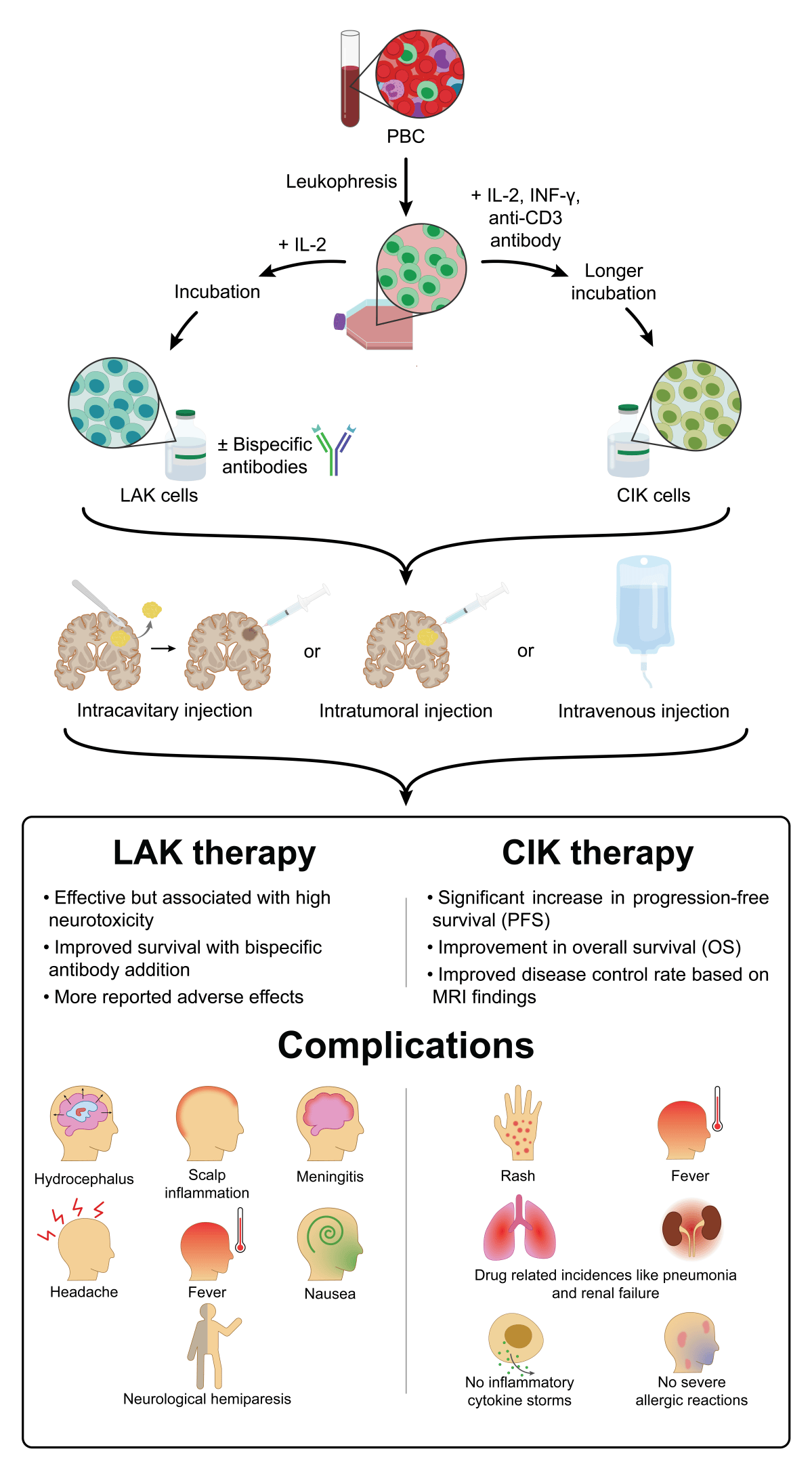
Circular RNAs (circRNAs) are a class of non-coding RNA that influence almost every process involved in stroke injury and recovery. Sana’s review needed one figure that showed what circRNAs do, how stroke damages the brain, and which specific circRNAs act on each damage pathway. This was our second project together, after the LAK to CIK figure published in the Journal of Translational Medicine.
The challenge
The figure had to cover two different types of stroke, more than ten injury mechanisms, and over a dozen named circRNAs, many of which act on several pathways at once. Laid out as a list, it would have been unreadable. The figure needed a structure that let readers find a mechanism first and then see which circRNAs regulate it.
From text to sketch
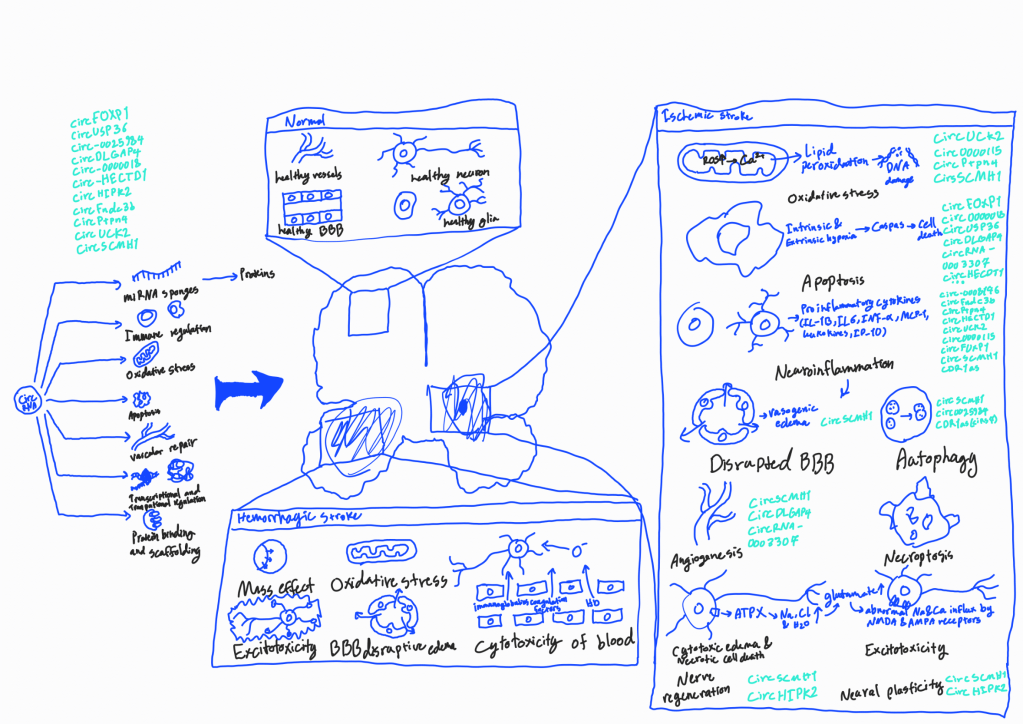
There was no sketch to start from, only the manuscript text. I read through the review, pulled out every mechanism and the circRNAs linked to it, and drew the layout myself before opening Illustrator. Planning the structure on paper first meant the dense ischemic panel could be organized before a single element was drawn.
My approach
I organized the figure from left to right, moving from the molecule to the brain to the mechanisms.
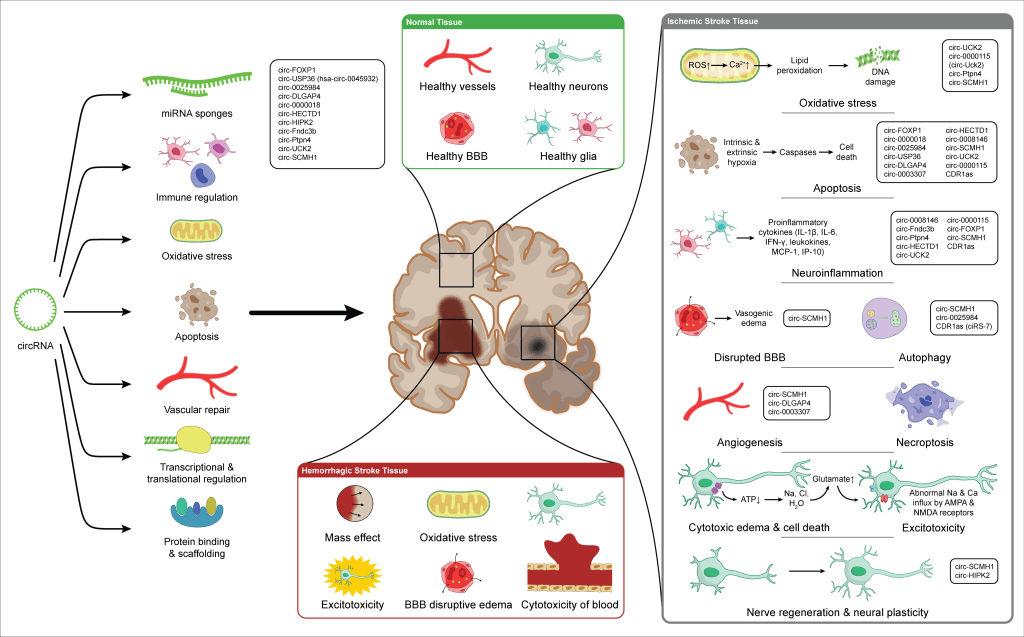
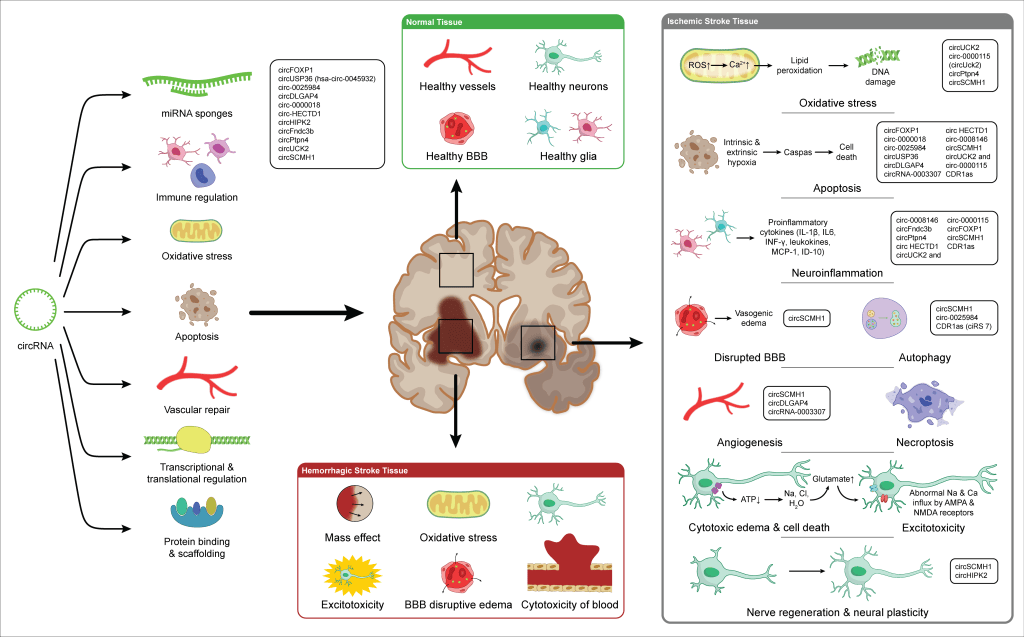
Left, what circRNAs do: a single circRNA branches into its seven main functions: miRNA sponging, immune regulation, oxidative stress, apoptosis, vascular repair, transcriptional and translational regulation, and protein scaffolding. Each function has its own simple icon, and the full list of circRNAs covered in the review sits beside them.
Center, the brain: one coronal brain section shows healthy tissue, a hemorrhagic lesion, and an ischemic infarct side by side. Each region is boxed and linked by zoom lines to its own panel, so readers can see exactly where each process happens.
Three color-coded panels: green for normal tissue (healthy vessels, neurons, glia, and blood–brain barrier), red for hemorrhagic stroke (mass effect, oxidative stress, excitotoxicity, edema, and blood toxicity), and grey for ischemic stroke. The ischemic panel is the most detailed, covering oxidative stress, apoptosis, neuroinflammation, blood–brain barrier disruption, autophagy, angiogenesis, necroptosis, cytotoxic edema, excitotoxicity, and nerve regeneration.
Labeled circRNA boxes beside each mechanism: every ischemic pathway has its own box listing the circRNAs that regulate it. Readers can trace any single circRNA, such as circSCMH1, across the panel and see how many pathways it touches.
The result
A single overview figure that connects circRNA biology to the main injury and repair pathways in both types of stroke. It gives readers a map of the review before they read the text and works equally well as a lecture slide on stroke pathophysiology.
Writing a review on stroke, neuroscience, or non-coding RNA? Start a project →